FREE SHIPPING!
Due to high demand, capsule orders may take 1-2 days to process!
SAME DAY SHIPPING (up to 2pm CST)
New customers save 10% off with code WELCOME10
Due to high demand, capsule orders may take 1-2 days before shipment
All orders ship free (orders $20 or more get upgraded to USPS priority Mail)
All orders ship free (orders $20 or more get upgraded to USPS priority Mail)
All orders ship free (orders $20 or more get upgraded to USPS priority Mail)
Kratom Powder is a finely ground botanical made from dried Kratom leaves. It is the most widely used Kratom format due to its versatility, ease of preparation, and relatively long shelf life when stored correctly.
These environmental elements influence the natural characteristics of the leaves before they are ever processed.
How Is Kratom Powder Made?
Kratom Powder is made through a drying and grinding process.
Basic steps:
Mature Kratom leaves are harvested
Leaves are dried under controlled conditions
Dried leaves are ground into powder
Powder may be sifted for consistency
Note:
Small changes during drying or grinding can affect the texture, color, and aroma. Natural variation is expected with plant-based materials and does not automatically indicate inconsistency.
What Does Kratom Powder Look Like?
Kratom Powder typically appears as:
A fine, flour-like powder
Light green, olive, or brownish-green in color
Smooth with minimal clumping when fresh
Color variation is normal and influenced by drying time and leaf maturity.
When stored correctly, Kratom Powder can last a year or longer. Freshness declines gradually rather than expiring suddenly.
Common signs of aging:
Fading aroma
Subtle color change
Increased clumping
FAQs
Is Kratom Powder natural?
Yes. Kratom Powder is produced by drying Kratom leaves and grinding them into a fine powder, without chemical alteration or synthetic additives.
Why does Kratom Powder taste bitter?
Kratom Powder tastes bitter due to naturally occurring plant compounds and alkaloids present in the leaves, such as Mitragynine. Bitterness levels can vary between batches.
Where is Kratom Powder commonly available?
Kratom Powder is commonly available from online brands like MitraMan Botanicals and local specialty stores, though availability can vary by region and demand.
Yes. Alkaloids in Kratom Powder can slowly degrade when exposed to air, light, heat, or moisture, leading to a gradual loss of freshness over extended storage.
Is Kratom Powder the same as crushed leaf?
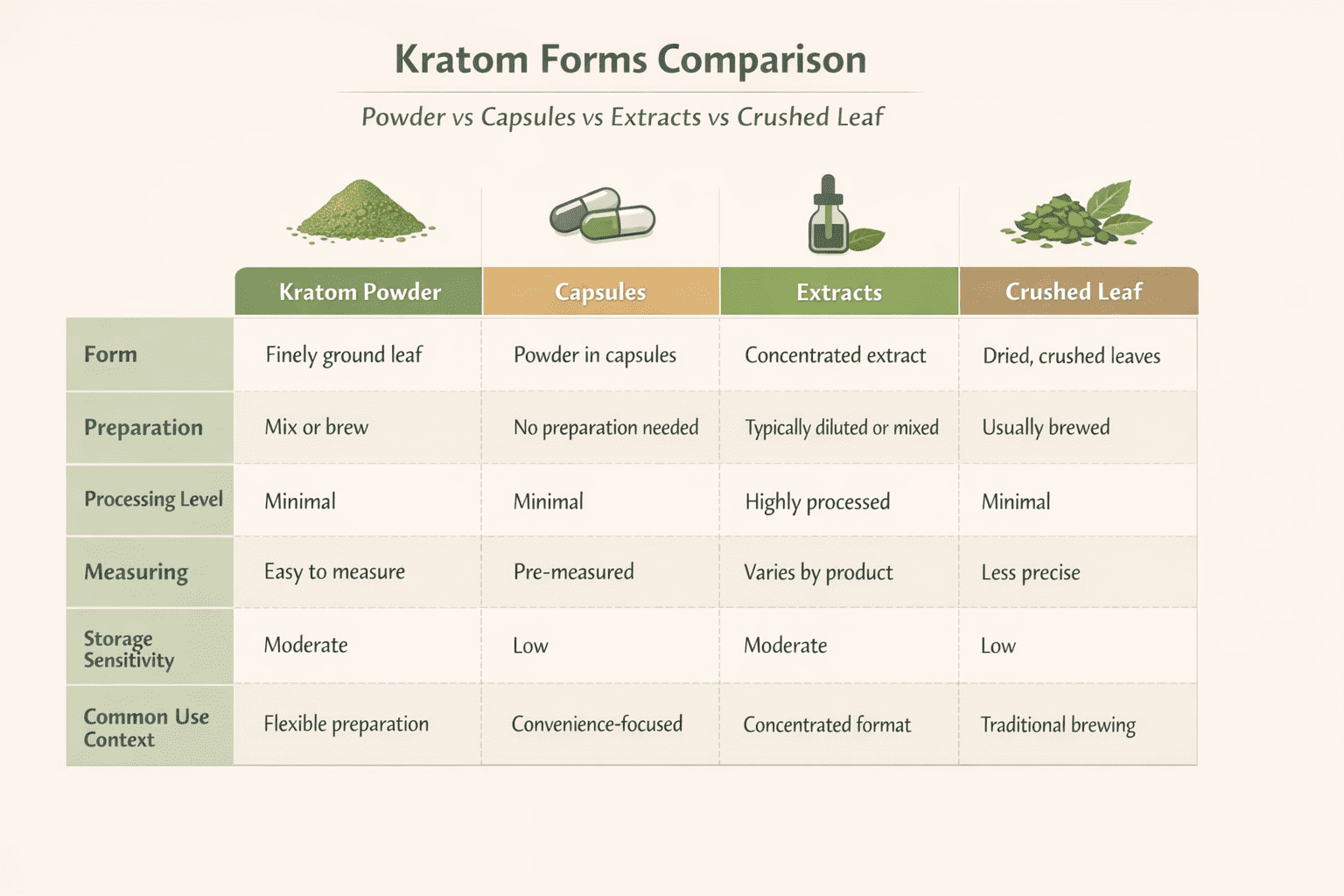
No. Kratom Powder is finely ground, while crushed leaf consists of larger fragments. This difference affects preparation methods, measuring accuracy, and sensitivity to storage conditions.
Does Kratom Powder expire?
Kratom Powder does not have a strict expiration date, but its freshness and alkaloid stability can decline gradually, especially if stored improperly.
In the United States, kratom is legal at the federal level but restricted in some states and local jurisdictions. Kratom Powder legality varies by region, so it is best to check official government websites for updates.
People often choose Kratom Powder for its versatility, ease of preparation, and ability to be mixed or brewed using different methods compared to other Kratom forms.
Which Kratom Powder is best for beginners?
For beginners, many experts suggest starting with well-balanced options, such as Red Bali or green-vein strains like Green Borneo or Green Malay. These strains are commonly available and tend to have more consistent processing, which can make them easier for new users to understand and compare.
How is Kratom Powder commonly prepared compared to Kratom Tea?
Kratom Powder is often mixed directly with liquids or food, while Kratom tea preparation usually involves simmering the powder or crushed leaves in water and straining the liquid before use.
Fresh Kratom Powder typically has a fine, dry texture, a consistent green-toned color, and a natural plant aroma. Excessive clumping, a dull appearance, or a stale smell may indicate reduced freshness, often due to air or moisture exposure.
Yes. Kratom Powder can differ by region or source due to variations in climate, soil conditions, leaf maturity, and local processing methods, all of which influence the natural characteristics of the leaves before grinding.
Disclaimer: This article is for informational purposes only and does not constitute medical, legal, or professional advice. Kratom regulations and information may vary by location and change over time.
Reviewed & Updated:
This article is intended for informational purposes and reflects current publicly available research and industry knowledge related to Kratom Powder. Content is reviewed periodically to ensure clarity and relevance.