FREE SHIPPING!
Due to high demand, capsule orders may take 1-2 days to process!
SAME DAY SHIPPING (up to 2pm CST)
New customers save 10% off with code WELCOME10
Due to high demand, capsule orders may take 1-2 days before shipment
All orders ship free (orders $20 or more get upgraded to USPS priority Mail)
All orders ship free (orders $20 or more get upgraded to USPS priority Mail)
All orders ship free (orders $20 or more get upgraded to USPS priority Mail)
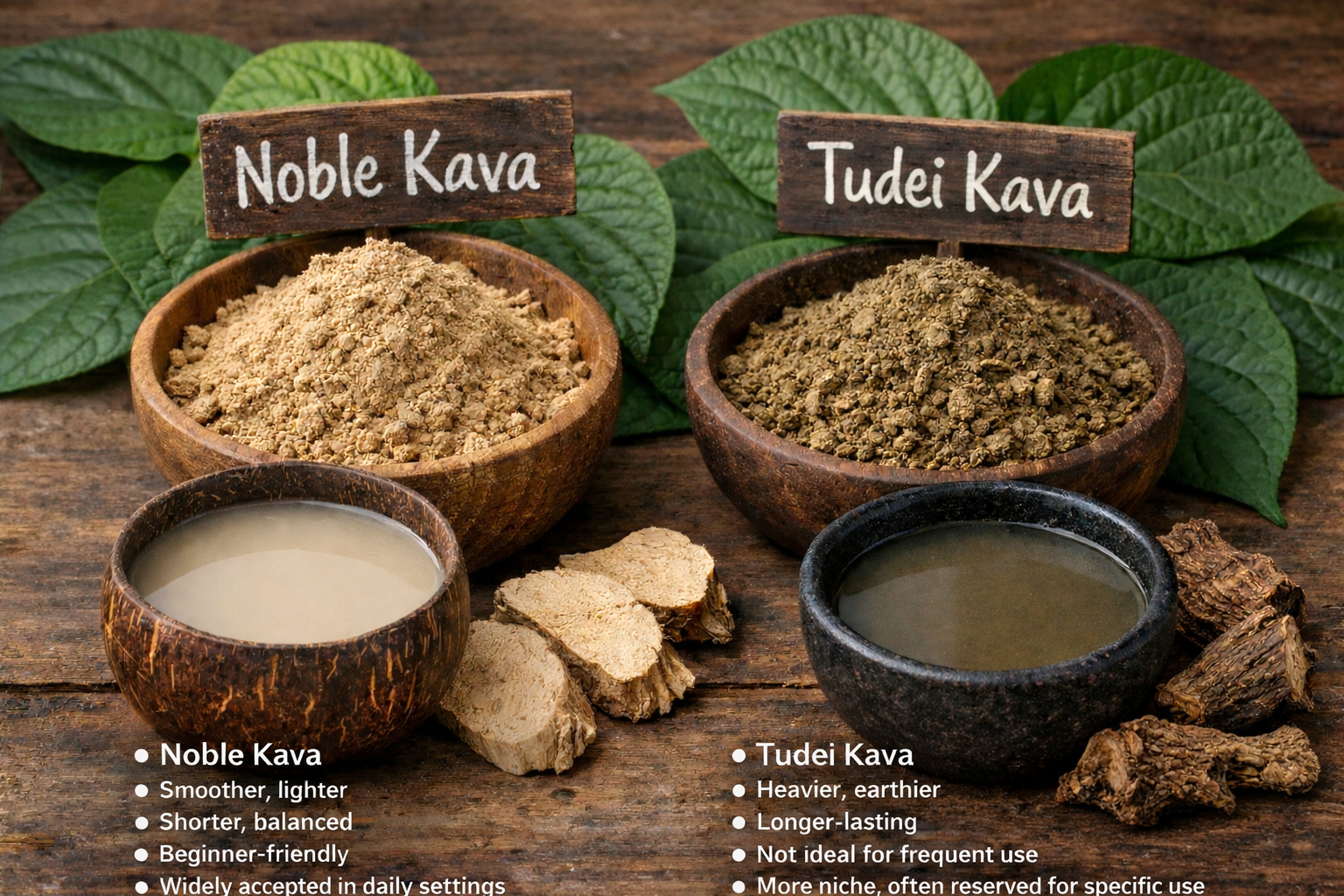
The discussion around Noble Kava vs Tudei Kava centers on two clearly recognized varieties of the Piper methysticum plant. Within traditional South Pacific classification, Noble Kava is considered smoother and more balanced, whereas Tudei Kava is known for its heavier, longer-lasting characteristics and is often not recommended for regular sessions.
Let’s break down the key differences so you can understand the two types of Kava in detail and choose one that fits your preference.
Noble Kava refers to specific cultivars of the Piper methysticum plant that have been traditionally grown in places such as Vanuatu, Fiji, Tonga, Samoa, Hawaii, and selected over generations for regular community use. Here’s what sets it apart:
Definition & Origin
Comes from carefully cultivated varieties, often called traditional Noble Kava.
Deeply rooted in South Pacific island culture.
Recognized locally as the preferred choice for ceremonial drink and daily gatherings.
Typical Experience Profile
Known for a smoother feel.
Balanced in character, without the heavy, lingering edge linked to other types.
Often described as more predictable from one batch to another.
Less likely to leave a next-day ‘hangover’ feeling.
Classified as the preferred export-grade variety in countries that regulate kava quality.
Traditional Vs Modern Formats
Traditionally prepared as a water-based drink using medium-grind root.
Today, also available in instant powders and ready-to-mix options.
Even in modern formats, the base material is still traditional Noble Kava cultivars.
Fun Fact:In Vanuatu, Noble Kava cultivars are traditionally graded and named individually, with some villages recognizing dozens of distinct types.
What Is Tudei Kava?
Tudei Kava is a stronger variety known for its long-lasting, heavier character. Unlike Noble varieties, it is not considered one of the common safe Kava types for regular use. Here’s what you should know:
Name Meaning (‘Two-Day’)
‘Tudei’ comes from ‘two-day.’
The name reflects reports that its effects may linger into the next day, sometimes even longer.
Tudei Kava Potency & Why It May Linger
Known for higher levels of certain Kavalactones, especially DHM and DHK.
Commonly associated with a deeper, more prolonged experience compared to Noble varieties.
Historical Context
Traditionally grown in places like Vanuatu.
In local settings, it has been reserved for specific ceremonial use rather than everyday gatherings.
Vanuatu has placed restrictions on the export of Tudei Kava to protect its national Kava reputation.
Modern Perspectives
This variety is less common in regulated Western markets than Noble varieties.
The difference between Noble and Tudei Kava becomes much clearer when you compare their core traits side by side. Here’s a simple breakdown to help you spot the differences fast:
Category
Noble Kava
Tudei Kava
Kavalactone Profile
Lower DHK and DHM levels, typically higher Kavain content
Higher DHK and DHM levels, lower Kavain content
Experience
Shorter in duration and generally milder
More intense and longer-lasting; often associated with next-day heaviness
Flavor
Smoother, lighter
Heavier, earthier
Suitability
Commonly considered appropriate for regular sessions
Not recommended for frequent use due to lingering aftereffects
Traditional Role
Widely used in social and ceremonial settings
Reserved for specific or ceremonial occasions rather than daily gatherings
Origin & Cultivation
Grown across several Pacific Island nations, including Vanuatu, Fiji, and Tonga
Strongly associated with Vanuatu; also cultivated in nearby islands such as Papua New Guinea
Export Status
Approved for export due to its balanced chemotype
Restricted from export in places like Vanuatu to protect national Kava standards
How To Choose Between Noble & Tudei Kava
Choosing between the two comes down to understanding noble vs tudei effects, along with your personal tolerance and overall preference.
Pick Noble Kava if you want a smoother, more balanced session.
Consider Tudei Kava only if you’re comfortable with a stronger, longer-lasting profile.
Match the format and check what your Kava bar, instant mix, or drink is made from.
Review the source, clear labeling, and batch details to confirm the cultivar and origin.
To ensure safety, focus on moderation, responsible sourcing, and a clear understanding of what you’re drinking. Even when choosing what many consider the best type of Kava, those factors still matter.
Start small and keep it moderate rather than excessive.
Avoid frequent use as Tudei Kava isn’t suited for regular sessions, and even Noble Kava is best spaced out.
Skip mixers and don’t combine Kava with alcohol or medications
Noble Kava and Tudei Kava are not interchangeable, and the distinction is important. The choice isn’t about strength alone; it comes down to cultivar type, origin, and how each one aligns with your intended use. Once you understand those differences, you can choose with clarity and avoid unwanted surprises.
1. Noble or Tudei Kava, which is best for beginners?
Noble Kava is generally better for beginners due to its smoother and more balanced profile. And, Tudei Kava is not typically recommended for first-time or inexperienced drinkers because of its heavier, longer-lasting nature.
2. Is Noble Kava better than Tudei Kava?
It depends. Noble Kava is generally preferred for regular and social use. And, Tudei Kava is not meant for everyday drinking. It is typically chosen for more specific and less frequent occasions. So what’s ‘better’ ultimately comes down to your personal preference.
3. How can you tell if Kava is Noble or Tudei?
Check the product label and vendor details for cultivar classification. Reputable sellers usually state whether the batch is Noble or Tudei.
4. Are all Kava cultivars classified as Noble or Tudei?
No, there are additional classifications beyond just these two. However, Noble and Tudei are the most commonly discussed categories.
5. Can Kava bars serve both Noble and Tudei varieties?
Yes, but many Kava bars specify that they serve Noble cultivars. It’s best to ask if the variety is not clearly listed.
Disclaimer: This content is for informational purposes only and is not intended as medical advice. Consult a qualified healthcare professional before using Kava, especially if you have underlying health conditions or take medications.