FREE SHIPPING! Due to high demand, capsule orders may take 1-2 days to process! SAME DAY SHIPPING (up to 2pm CST) New customers save 10% off with code WELCOME10 Due to high demand, capsule orders may take 1-2 days before shipment
All orders ship free (orders $20 or more get upgraded to USPS priority Mail) All orders ship free (orders $20 or more get upgraded to USPS priority Mail) All orders ship free (orders $20 or more get upgraded to USPS priority Mail)
What Is Kava? A Complete Beginner’s Guide by Mitraman

What Is Kava? A Complete Beginner’s Guide by Mitraman

Kava is a shrub known scientifically as Piper methysticum, a member of the pepper family that also includes black pepper. If you’ve been trying to understand what is Kava, it helps to start with its roots: both botanical and cultural.  In this guide, we’ll cover where Kava comes from, what it’s made from, how it works, how it feels, how to prepare Kava, and what to know before trying it for yourself.  Who Is This Guide For?
  • Kava enthusiasts
  • First-time Kava users
  • Those seeking plant-based alternatives
  • People interested in traditional cultural beverages
  • Anyone comparing Kava with other botanical drinks
  • Curious drinkers who enjoy trying something new
 

Table Of Contents:


What Is Kava?

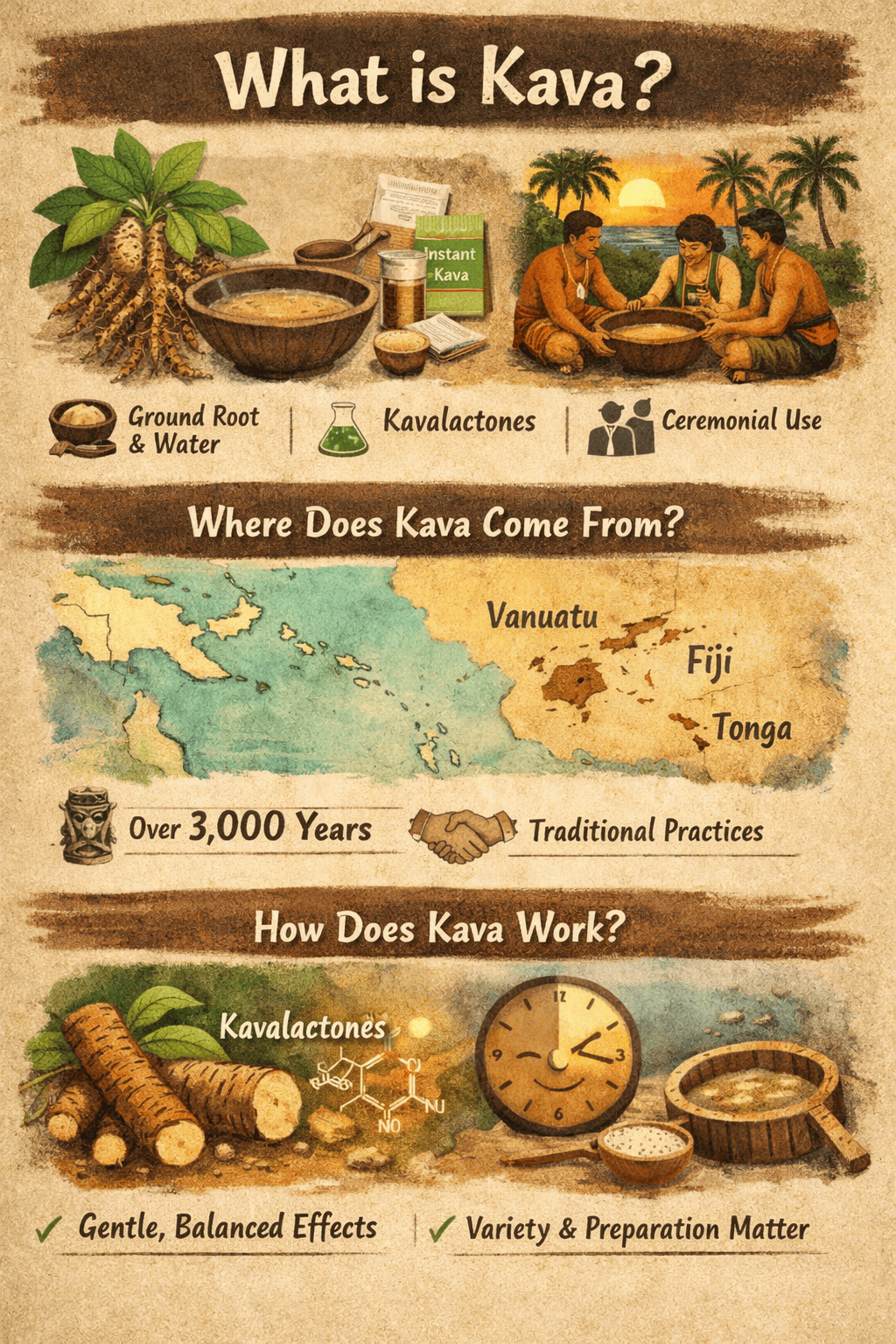
Kava is a tropical shrub whose root is prepared into a traditional drink that has been part of Pacific Island communities for generations.
  • Prepared by mixing ground root with water
  • Contains natural compounds called Kavalactones
  • Commonly shared in social and ceremonial settings
  • Also available today in instant and ready-to-mix forms
 

Where Does Kava Come From?

Kava originates in the South Pacific islands, with Vanuatu considered the primary center of origin and greatest genetic diversity. It spread to nearby islands including Fiji, Tonga, Samoa, and Hawaii.
  • Used there for over 3,000 years
  • Used in traditional conflict resolution, welcoming ceremonies, and social bonding
Read more: Kava Powder Guide: What To Know Before You Buy

What Are The Different Types Of Kava? 

Not all Kava is the same, as different varieties and formats can shape the overall experience.

Noble Kava

  • Traditionally grown and consumed in Pacific island communities.
  • Known for a smoother, more even feel compared to other varieties.
  • Commonly chosen by those who drink Kava on a regular basis.
 

Tudei Kava

  • Considered stronger and more lingering in effect.
  • Often described as heavier in overall feel.
  • Typically not preferred for frequent or casual sessions.
Read more: Tudei Kava vs Noble Kava – Which One Should You Choose?

Instant & Micronized Kava

  • Processed into a fine, ready-to-mix format.
  • Requires little to no traditional preparation.
  • Often selected by beginners for convenience and ease.
 

How Does Kava Work?

Kava works through naturally occurring compounds, known as Kavalactones, found in its root.
  • These compounds interact with certain receptors in the body
  • Effects build gradually rather than all at once
  • The experience depends on the variety and preparation method
  • Does NOT produce the same intoxication associated with alcohol
 
Safety note: When enjoyed in moderation, Kava is not known to cause the kind of impairment commonly associated with alcoholic drinks. 
What Is Kava Read more: Kava Strains: Everything You Need To Know

How Does Kava Make You Feel?

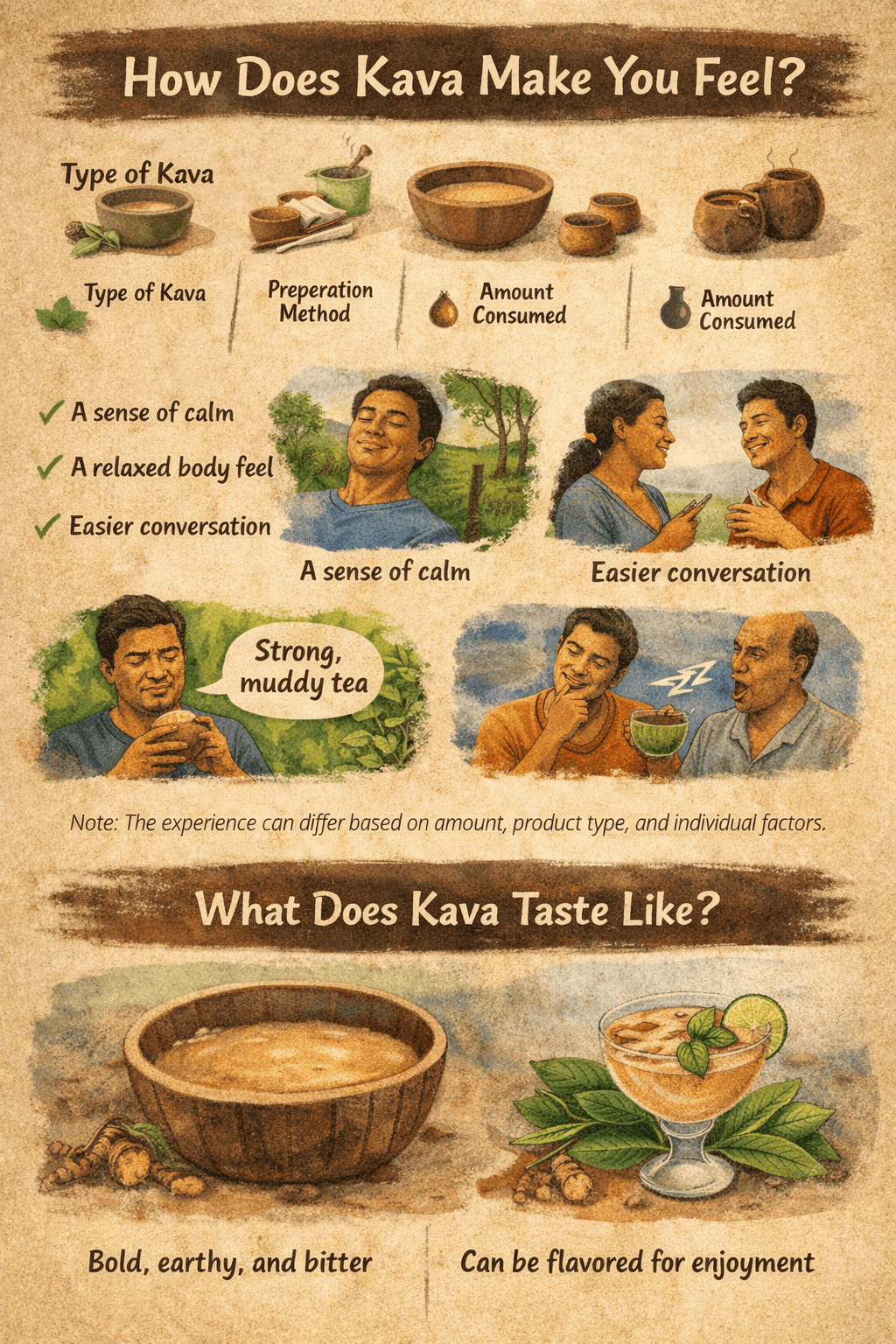
The overall experience can differ depending on:
  • Type of Kava: Some varieties feel lighter and smoother, while others feel heavier.
  • Preparation method: Traditional brews and instant forms can feel slightly different.
  • Amount consumed: Smaller servings feel subtle; larger ones feel more noticeable.
Commonly reported Kava benefits include:
  • A sense of calm [1]
  • A relaxed body feel [2]
  • Easier, more natural conversation [3] 
  • Light mouth or tongue numbness (a normal part of drinking Kava)
 
Note: Kava experiences can vary depending on the amount used, the type of product, and individual factors such as hydration levels and overall health. 
Read more: How Long Does Kava Take To Kick In?

What Does Kava Taste Like?

Kava has an earthy, peppery flavor with a noticeable natural bitterness. Many compare it to strong, muddy tea. Some modern Kava drinks add flavors to make them easier and more enjoyable to drink, but the traditional brew retains its bold, root-like taste. How Does Kava Make You Feel For a detailed guide on this topic, check out  What Does Kava Taste Like?
How To Prepare Kava

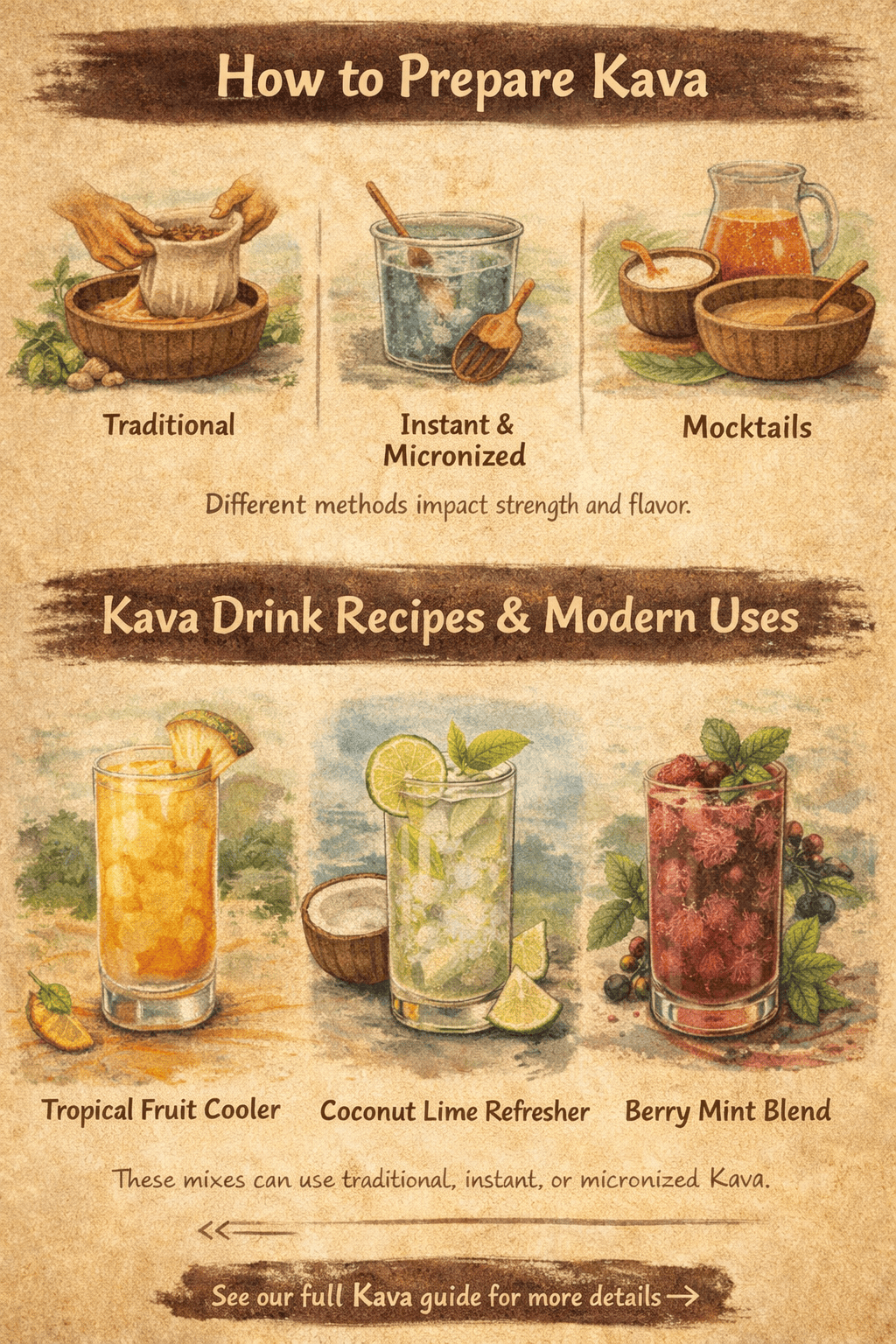
The way Kava is prepared has remained largely the same for generations, though modern options have made it more convenient.
  • Traditional brew: Medium-grind root is placed in a strainer bag, mixed with water, and kneaded thoroughly, then strained into a bowl. This is the classic preparation most closely tied to what Kava is in its original form.
  • Instant and Micronized Kava: Finely processed forms that dissolve directly in water. Instant Kava requires no kneading or straining, while micronized Kava may require light straining depending on preparation.
  • Kava drinks or mocktails: Prepared Kava blended with juices or other mixers for a smoother, more approachable taste.
The method used can influence both flavor and overall strength.

Kava Drink Recipes & Modern Uses

These simple ideas show how Kava can fit into everyday routines while keeping preparation enjoyable yet simple.

Tropical Fruit Cooler

Prepare traditional Kava by kneading and straining it as usual. Once ready, mix it with chilled pineapple or mango juice to make a quick mocktail and serve over ice.

Coconut Lime Refresher

Kava blended with coconut water and a squeeze of fresh lime for a light, balanced taste. Can be made using traditional, instant, or micronized Kava.

Berry Mint Blend 

Dissolve micronized Kava directly into cold water and stir well until fully mixed. Add lightly crushed berries and a few fresh mint leaves, then serve over ice. Stir before drinking for an even blend. These modern formats make Kava easier to enjoy in different settings. For a deeper dive into preparation methods, explore our detailed How To Make Kava .
How To Prepare Kava

Kava vs Alcohol: Key Differences! 

Here’s how you can differentiate between Kava and alcohol: 
Feature Kava Alcohol
Intoxication No Yes
Mental clarity Maintained Reduced
Hangover No Common
Social ritual Yes Yes
 

Kava vs Kratom: A Comparison! 

Both Kava and Kratom are plant-based, but they are very different in how they’re used and how they’re regulated.
Feature Kava Kratom
Origin South Pacific islands Southeast Asia
Plant source Piper methysticum root Mitragyna speciosa leaf
Flavor profile Earthy and peppery Earthy, strong, and bitter
Reported benefits Kava effects are often linked to unwinding and social ease May range from stimulating to more grounding, depending on the vein type
Risks involved Best used in moderation; quality and variety matter (rare liver concerns with poor quality or overuse) Regulation, potency, and product type play a larger role in risk (higher dependence potential)
Legality Legal throughout the US (2026) Legal status varies significantly by state and country
Traditional use Ceremonial and communal drink Historically used for labor and traditional practices
Read more: Kava vs Kratom: What To Know Before Choosing One

Is Kava Safe?

For most adults, Kava is generally considered safe when used responsibly, especially when choosing noble varieties and avoiding excessive or prolonged use. Rare cases of liver concerns have been reported historically, often linked to poor-quality products, overuse, or combinations with alcohol/other substances—stick to reputable sources and moderate amounts. Best practices include:
  • Drink in moderation
  • Avoid heavy or excessive daily intake
  • Spread out your consumption, even if you’re choosing a noble cultivar
  • Buy from reputable sources that clearly label their products
Read more: Is Kava Good For You?   Kava is legal in the United States as of 2026. It is not a controlled substance federally and is sold as a dietary supplement or conventional food (especially in traditional preparations). The FDA has confirmed kava beverages as food under federal law in recent clarifications. That said, regulations can vary by state. Some regions may have import restrictions or specific labeling and preparation requirements (e.g., certain cities regulate kava bar serving methods). It’s always a good idea to check local laws before purchasing or traveling with it.

Who Should Try Kava?

Kava often attracts people who prefer a slower, more thoughtful experience. If you’re exploring what is Kava and how it fits into today’s lifestyle, it can be a simple way to add a traditional ritual to your routine.
  • Those who prefer plant-based options: Kava comes from the root of a tropical shrub and is prepared simply with water.
  • Those who enjoy ritual-style beverages: The traditional kneading and serving process adds a hands-on, communal element many find meaningful.
  • Those who want a social drink without alcohol: It’s often enjoyed in relaxed group settings as a shared beverage.
 

Frequently Asked Questions

1. What is Kava used for?

Kava is traditionally used as a social and ceremonial drink in Pacific Island cultures and is now commonly enjoyed as a non-alcoholic option in relaxed settings.

2. Does Kava make you drunk?

No. Kava does not produce the same type of intoxication linked to alcohol.

3. Is Kava addictive?

Kava is not widely regarded as addictive when used responsibly and in moderation.

4. Can you drink Kava every day?

While some people include it regularly, moderation is generally advised to minimize any potential risks.
0
    0
    Your Cart
    Your cart is emptyReturn to Shop