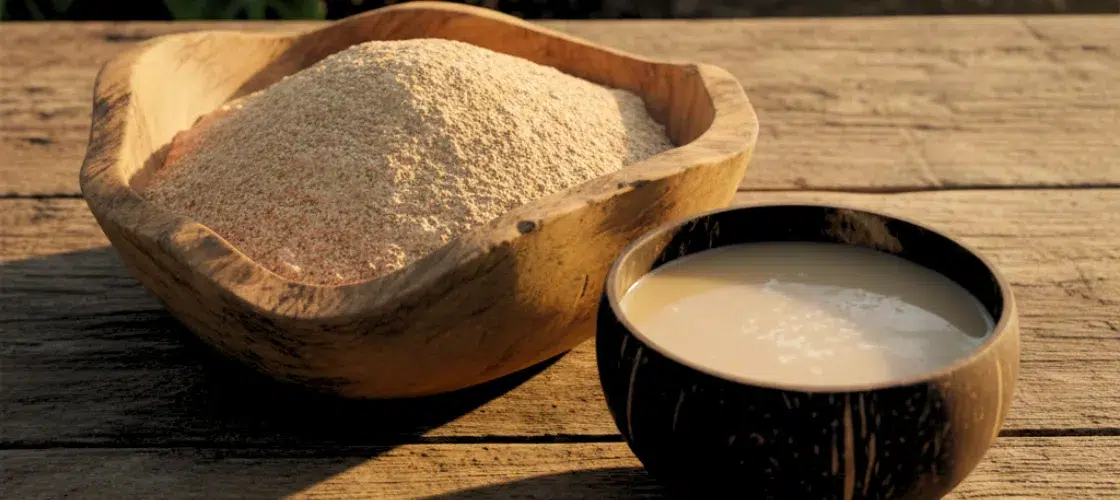
Kava is made from the mature root of Piper methysticum, a cultivated shrub native to the South Pacific. The root contains naturally occurring compounds known as kavalactones, which define the plant’s chemical profile and play a central role in traditional preparation.
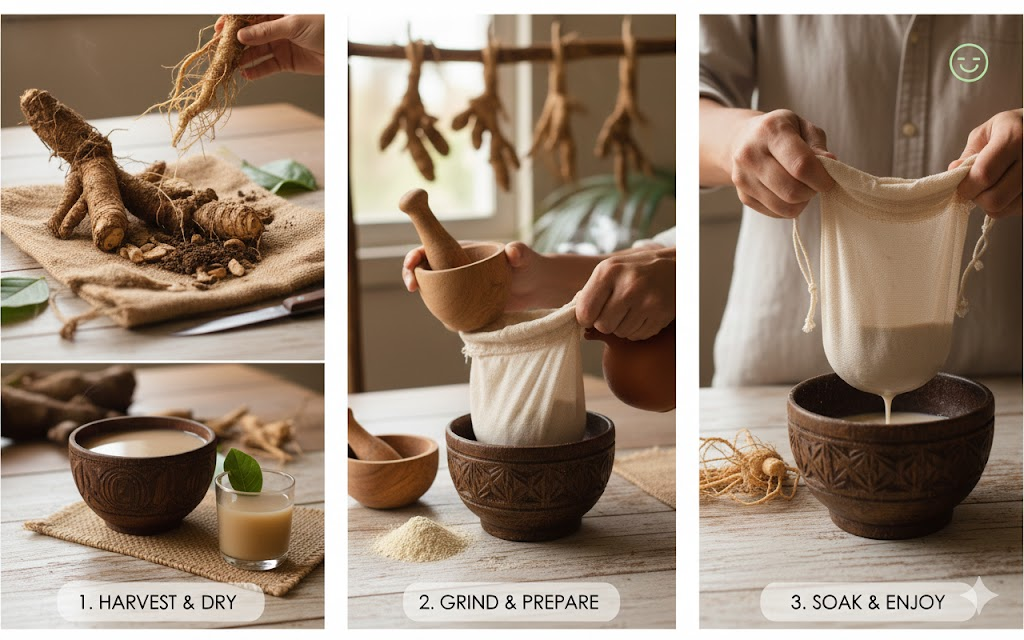
Many people ask, “What is Kava made from beyond just ‘the root’?” Which exact part of the plant is used? What are kavalactones? How does a woody root become a drink? Are modern Kava products ever blended with additional ingredients?
This guide breaks down the plant itself, the specific root material used, how kavalactones function within the root, how traditional preparation works, and what to know when evaluating different Kava products.
Botanical & Chemical Snapshot
|
| Traditional Preparation | Modern Preparation |
| Hand-kneading the ground root in water | Blender methods for faster mixing |
| Straining through cloth or fiber | Instant Kava powders |
| Root mixed only with water | Ready-to-drink Kava products |
| Done fresh before serving | Pre-processed for convenience |
You must be 21+ to use this site.