FREE SHIPPING! Due to high demand, capsule orders may take 1-2 days to process! SAME DAY SHIPPING (up to 2pm CST) New customers save 10% off with code WELCOME10 Due to high demand, capsule orders may take 1-2 days before shipment
All orders ship free (orders $20 or more get upgraded to USPS priority Mail) All orders ship free (orders $20 or more get upgraded to USPS priority Mail) All orders ship free (orders $20 or more get upgraded to USPS priority Mail)
What Is Kava Made From? Understanding Kava Root & Kavalactones

What Is Kava Made From? Understanding Kava Root & Kavalactones

what is kava made from Kava is made from the mature root of Piper methysticum, a cultivated shrub native to the South Pacific. The root contains naturally occurring compounds known as kavalactones, which define the plant’s chemical profile and play a central role in traditional preparation. Many people ask, “What is Kava made from beyond just ‘the root’?” Which exact part of the plant is used? What are kavalactones? How does a woody root become a drink? Are modern Kava products ever blended with additional ingredients? This guide breaks down the plant itself, the specific root material used, how kavalactones function within the root, how traditional preparation works, and what to know when evaluating different Kava products.
Botanical & Chemical Snapshot
  • Scientific Name: Piper methysticum
  • Plant Family: Piperaceae (same family as black pepper)
  • Plant Type: Cultivated shrub
  • Active Compounds: Kavalactones (a unique class of plant compounds)
  • Part Used: Mature root

What Is Kava Made From? The Specific Part of the Plant Used

  • Only the root of the Piper methysticum plant is used. This is where Kavalactones are concentrated.
  • Leaves and stems are avoided. They are not used in traditional Kava preparation and differ in composition from the root.
  • Roots must be mature. Plants are typically harvested after several years of growth, not while young.
Read More: What Is Kava? A Beginner’s Guide

What Are Kavalactones?

Kavalactones are naturally occurring compounds concentrated in the root. They define the plant’s chemical profile and are central to traditional preparation.
  • They develop naturally within the plant and are not added during processing.
  • They are most concentrated in the mature root, which is why this part of the plant is used.
  • In Pacific Island traditions, the value of Kava root is directly linked to its kavalactone content.
  • The balance of kavalactones can vary between cultivars, growing regions, and harvest batches, leading to differences in overall composition.
unnamed (80)
If you want to know more about the working of Kava, read our guide on “How Does Kava Work in the Body?”

Types of Kava Roots: Noble vs Other Varieties

Not all Kava roots are classified the same way. In Pacific Island cultivation, Kava is broadly grouped into noble varieties and other non-noble types, sometimes referred to as Tudei or wild-type Kava.

Noble Kava

  • Traditionally selected for regular social and ceremonial use
  • Derived from cultivated, mature root systems
  • Generally preferred in modern commercial products

Non-Noble (Tudei) Kava

  • Includes varieties that are less commonly used for everyday drinking
  • May differ in root composition and overall chemical profile
  • Not always clearly identified on product labels
The distinction is based on traditional classification and long-standing cultivation practices in the South Pacific. For a deeper breakdown of the differences between Noble and Tudei varieties, see our full guide on Noble Kava vs Tudei. unnamed (81)

How Is Kava Traditionally Prepared

Kava preparation follows a simple, root-focused process that has been practiced in the South Pacific for generations.

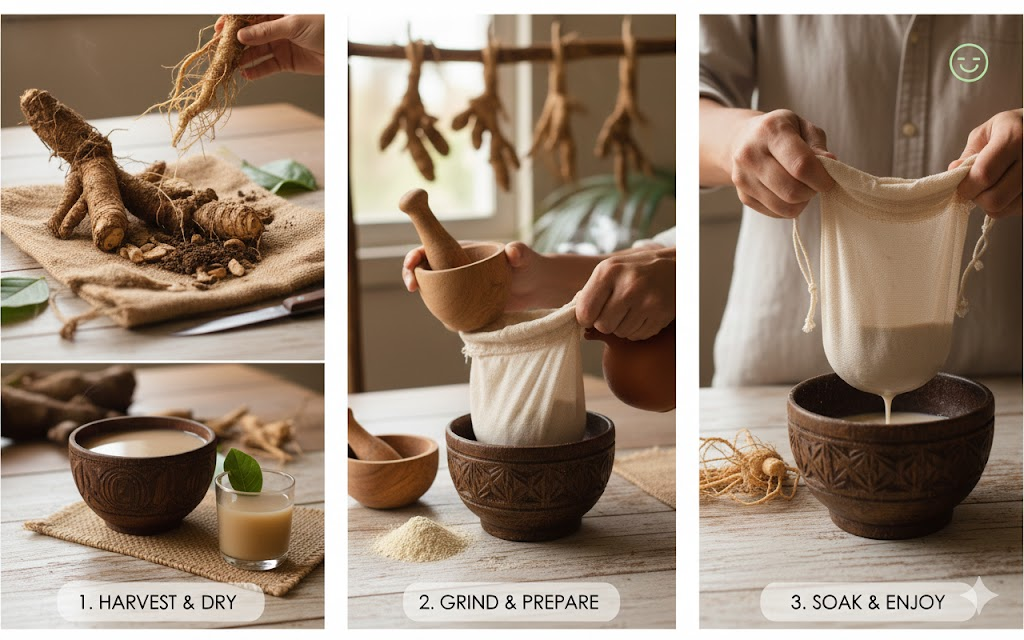
Step 1: Harvest mature roots

The plant grows for several years before it is harvested. The roots are dug up and cleaned.

Step 2: Dry the root

The root may be used fresh, but it’s often dried to make grinding easier and improve shelf life.

Step 3: Grind into powder

Once dried, the root is crushed or ground into a coarse powder. This is the base for most Kava drinks.

Step 4: Mix with water

The ground Kava Powder is combined with cool water. It is kneaded or stirred to extract the root compounds.

Step 5: Strain and serve

The liquid is strained to remove the fibers. Because traditional preparation uses only ground root and water, the drink has a distinct natural flavor. For a detailed breakdown, see our guide on what Kava tastes like. unnamed (82)

Traditional vs Modern Kava Preparation

Traditional Preparation Modern Preparation
Hand-kneading the ground root in water Blender methods for faster mixing
Straining through cloth or fiber Instant Kava powders
Root mixed only with water Ready-to-drink Kava products
Done fresh before serving Pre-processed for convenience
Read More: Kava Powder Guide: What To Know Before You Buy

Is Kava Made With Any Additives?

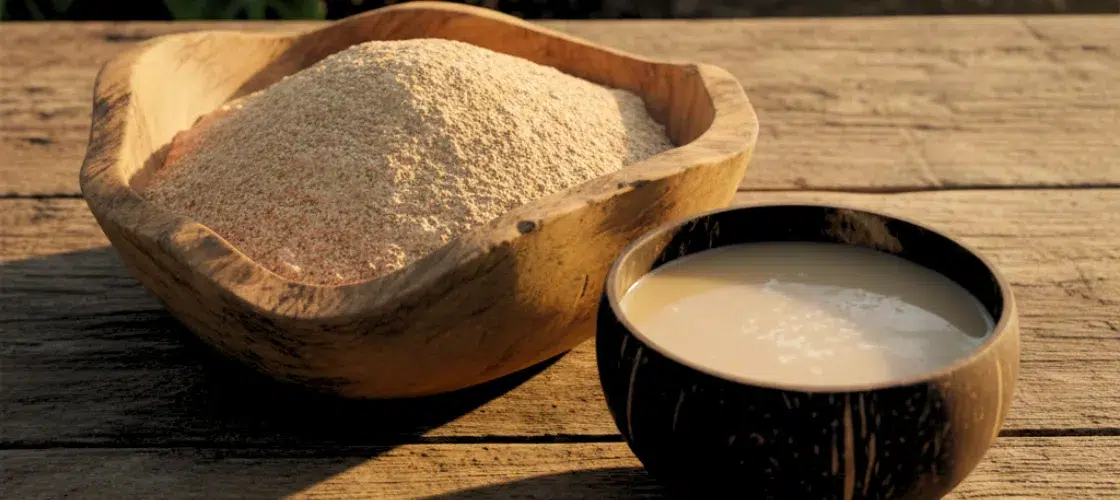
Traditionally, Kava is made using only ground Kava root mixed with water (and sometimes coconut milk). Nothing else is required. The preparation focuses entirely on the root. Today, Kava is available in different formats, including drink mixes and ready-made products. These modern options may contain additional ingredients depending on the brand and formulation. That’s why label transparency matters. If you’re looking for a root-only option, check the ingredient list to confirm the product contains only Kava root. unnamed (83)

Why the Source of Kava Matters

  • Quality considerations: Knowing that authentic Kava is made from mature root helps clarify what should (and should not) appear on an ingredient label.
  • Taste differences: Variations in root type, maturity, and preparation can influence flavor and overall profile.
  • Cultural context: Traditional Kava preparation has always centered on mature root, reflecting long-standing Pacific Island cultivation practices.
  • Product evaluation: Understanding what Kava is made from makes it easier to interpret product descriptions and classifications.

Final Thoughts – What Is Kava Really Made From?

Kava is made from the mature root of the Piper methysticum plant. Its identity has remained consistent across generations of cultivation and traditional preparation in the South Pacific. Understanding what Kava is made from brings clarity to everything else — from how it is prepared to how it is labeled and classified today. When you know that authentic Kava centers on mature root and naturally occurring kavalactones, product descriptions and ingredient lists become easier to interpret.

FAQs

1. Where does Kava come from?

Kava comes from the root of the Piper methysticum plant, a cultivated shrub native to the South Pacific. It has been traditionally grown in countries like Fiji, Vanuatu, Tonga, and Samoa, where the mature root is harvested and prepared for ceremonial and social use. For more detailed information, you can read our guide on “Where does Kava come from?”

2. Are Kava & Kratom the same?

No. Kava and Kratom come from entirely different plants and regions. Kava is made from the root of Piper methysticum, native to the South Pacific, while Kratom comes from the leaves of Mitragyna speciosa, a tree native to Southeast Asia. They differ botanically and chemically. If you want to learn more about their differences, check this blog out: Kava vs Kratom – What’s the Difference?

3. Is Kava made from leaves or the whole plant?

No. Authentic Kava is made only from the root of the Piper methysticum plant. Leaves, stems, and aerial parts are not used in traditional preparation.

4. Is Kava natural or processed?

Kava is natural, as it comes directly from the plant root. The only processing involved is cleaning, drying, grinding, and mixing with water.

5. Is Kava made the same way in every country?

The base process remains root mixed with water, but preparation styles can vary slightly between Pacific Island cultures. Some use fresh root, while others use dried root.

6. Does all Kava come from the same type of root?

No. Different cultivars of Kava exist, and roots can vary in age and chemical profile. This is why Kava is sometimes categorized as noble or non-noble.

7. Is Kava synthetic or chemically created?

No. Kava is plant-derived. The compounds found in Kava root occur naturally and are not manufactured in a lab.

8. Where can I buy authentic Kava?

Authentic Kava can be purchased from specialty retailers, reputable online stores, and dedicated kava bars. When buying, look for products that clearly state they are made from mature root and identify the variety, such as noble kava, to ensure transparency and quality. Read More: Where Can I Buy Kava?

9. Can Kava be made without water?

Traditionally, water is the primary liquid used to prepare Kava. Coconut milk is sometimes used, but alcohol-based extraction is not part of traditional preparation methods.
0
    0
    Your Cart
    Your cart is emptyReturn to Shop